More Than a Place to Eat
The dining room holds a unique position in the home. It's where meals become occasions, where conversations linger, and where family traditions take shape. A well-designed dining room elevates everyday meals into something special and makes entertaining feel effortless.
Yet the dining room is often the last room to receive design attention. At Joel's, we believe it deserves to be one of the first.
Choosing the Right Table
The dining table is the centerpiece of the room, and getting it right starts with practical considerations.
Size and Seating
A comfortable dining experience requires roughly 24 inches of table width per person. Here's a general guide:
- 4 people: 48-inch round or 60-inch rectangular
- 6 people: 60-inch round or 72-inch rectangular
- 8 people: 72-inch round or 84 to 96-inch rectangular
- 10+ people: 108-inch or longer rectangular, or consider an extension table
Always leave 36 inches between the table edge and the nearest wall or furniture piece. This ensures chairs can be pulled out comfortably and people can circulate while others are seated.
Shape Matters
Rectangular tables are the most versatile and work well in most dining rooms. They're ideal for longer rooms and accommodate the most seating for the footprint.
Round tables create intimacy and encourage conversation since everyone faces the center. They work beautifully in square rooms and eliminate the hierarchy of "head of the table" seating.
Oval tables offer the best of both worlds — the length of a rectangle with the softness and social equality of a round. They're particularly elegant in formal dining rooms.
"The shape of your table shapes the conversation at it. Round tables create democracy; rectangular tables create ceremony. Choose the dynamic you want." — Joel's Design Philosophy
Explore our dining table collection to find the shape and size that's perfect for your space.
Selecting Dining Chairs
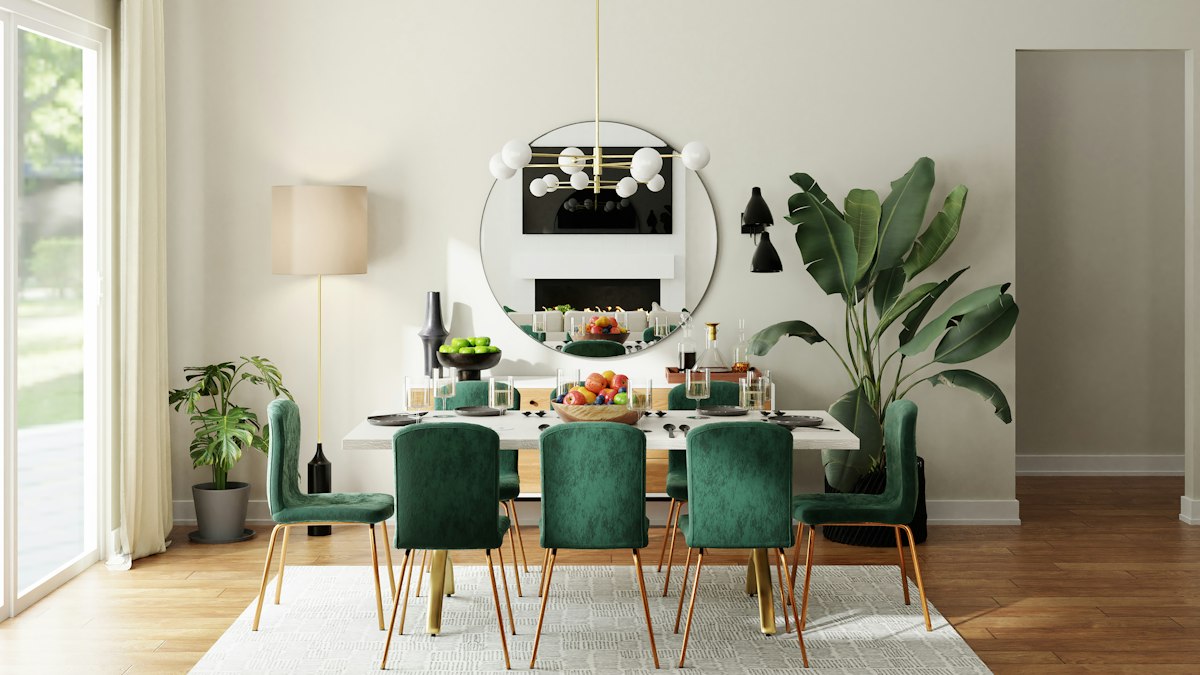
Chairs should complement the table without matching it exactly. In fact, some of the most sophisticated dining rooms pair different chair styles — perhaps upholstered host chairs at the heads with a different style along the sides.
Key considerations:
- Seat height should place the table surface roughly 12 inches above the seat (standard table height is 30 inches, standard seat height is 18 inches)
- Arm chairs add elegance at the heads of the table but require additional width — measure to ensure they slide under the table
- Upholstered seats are more comfortable for lingering dinners. Performance fabrics make them practical even for families with young children
Lighting Sets the Mood
Dining room lighting may be the single most impactful design decision you make. The right fixture transforms the atmosphere from functional to magical.
Chandeliers and pendants should hang 30 to 34 inches above the table surface. The fixture should be roughly two-thirds the width of the table for proper proportion.
Dimmer switches are essential — non-negotiable, in our opinion. Bright light for weeknight homework sessions, soft warmth for dinner parties. The same fixture at different intensities creates completely different experiences.
Candles remain the most flattering and atmospheric light source ever invented. Even a few tapers on the table elevate a Tuesday dinner into something memorable.
The Art of Table Setting
A beautiful table is a canvas, and how you dress it affects the entire room's feel.
Everyday elegance: A simple runner or placemats, cloth napkins (always cloth — the upgrade from paper is small in cost and enormous in impact), and a low centerpiece that doesn't block sight lines across the table.
Entertaining: Layer a tablecloth with charger plates, multiple glasses, and a more elaborate centerpiece. The key is consistency in formality — everything should feel like it belongs at the same party.
Minimalist approach: Sometimes the table itself is beautiful enough to be the star. A polished wood surface with nothing but a single sculptural vase can be breathtaking.
Accessorizing the Space
Beyond the table, the dining room benefits from thoughtful accessories:
A sideboard or buffet provides essential storage for tableware and linens while offering surface area for serving during meals and display between them. Browse our console and sideboard collection for pieces that work in both dining and living spaces.
Art on the walls should be substantial enough to hold its own in a room dominated by a large table. One bold piece is often more effective than a gallery wall in a dining room.
A rug under the table adds warmth and defines the space, especially in open floor plans. Size it so that chairs remain on the rug when pulled out — typically 8 by 10 feet for a standard dining arrangement.
Creating Atmosphere
The most memorable dining rooms engage all the senses:
- Sight: Beautiful furniture, warm lighting, intentional decor
- Touch: Comfortable upholstered chairs, quality table linens, smooth wood surfaces
- Sound: Soft furnishings (rugs, upholstery, curtains) absorb echo and create acoustic intimacy
- Scent: Fresh flowers, unscented candles (let the food take center stage), or a subtle room spray before guests arrive
Your Dining Room, Elevated
Whether you're starting from scratch or refreshing an existing space, the dining room rewards investment. It's a room that earns its keep — hosting holidays, celebrations, everyday family dinners, and quiet morning coffees.
Explore our dining collections for tables, chairs, and accessories that make every meal an occasion. Or schedule a consultation with our design team to plan your perfect dining room from start to finish.